
Gentle melancholy
Subtle German words for complex states

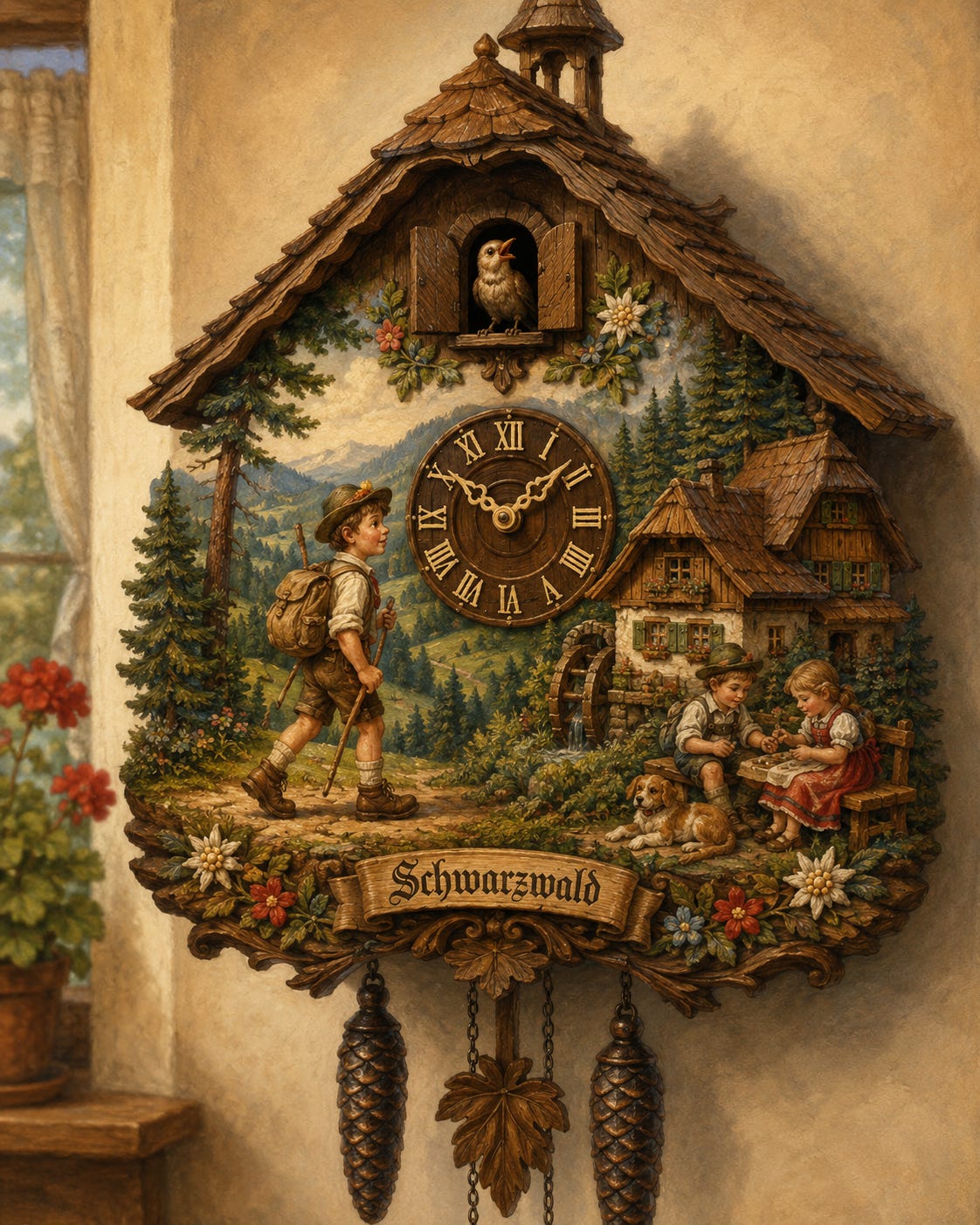
“Childhood joy / Kindheitsfreude” designed by me
I came across the word Wehmut recently and it intrigued me. It put a name to a mood I have sometimes. That and these other amazing German words also remind me of my dear grandmother, who came from the Black Forest region. She was kind and loving and always had interesting folk stories and words to share with me. I dedicate this post to her. Thinking about her brings back happy memories.
Here is the list of words. I did some research and I hope you find this interesting.
“Gentle melancholy” - Wehmut (pronounced VAY-moot).
Cassell’s German dictionary definition: “sadness, melancholy, wistfulness.”
It portrays a specific, poetic blend of gentle sadness, nostalgic longing, and wistfulness.
It often describes a bittersweet state of looking back at the past with a quiet, tender sorrow, rather than a heavy or depressive gloom.
· Wehmütig: Adjective, melancholy or wistful.
· Wehmutsvoll: Meaning “full of wehmut”
“Longing and Solitude” – Sehnsucht (ZEEN-zucht)
Cassell’s dictionary definition: “longing, yearning, ardent desire, hankering after something.”
From sehnen (reflexive verb) long, yearn, crave, hanker (for), pine (for), grieve (for or over).
A deep, intense longing for an elusive, unattainable, or unknown ideal.
An intense feeling of longing or yearning
Fernweh: A painful longing to travel and visit far-off places; the opposite of homesickness.
Cassell’s simply defines it as “wanderlust,” but it conveys more than that.
Waldeinsamkeit: The deep, peaceful feeling of being alone and connected to nature in the woods.
Cassell’s doesn’t list this word directly, but we observe that it is a compound noun (a form often occurring in German) which combines Wald (wood, forest) + Einsamkeit (loneliness, solitude, literally “one-ness” or the state of being by oneself). It is interesting that Einsamkeit can refer either to loneliness (the painful feeling of being alone) or solitude (the peaceful, positive state of being alone) – depending on the context.
The last word reminds me of this happy little tune. “The Happy Wanderer”. In German, “Der fröhliche Wanderer” (The Joyful Wanderer) or “Mein Vater war ein Wandersmann“ (My Father was a Wanderer). You can listen to it, with the original German children’s choir on Ed Sullivan. I find it touching that many of the members of the choir were war orphans –yet they sing such a happy song! I remember singing this in school choir. Link to youtube
That song is also a popular polka tune, you can find many versions on youtube.
And the Wikipedia article on the song is quite interesting. Link
Good wishes / Alles gut (all the best).
you pretty much described most my moods! haha. love it. i have my great grandmother was from germany.
There is something especially tender about inheriting not only stories from a grandmother, but words through which certain feelings become recognisable. Wehmut seems particularly beautiful because it allows happiness and sorrow to remain together, without forcing either one to cancel the other. Your dedication gives the list a living centre: these are not merely intriguing German words, but part of the emotional vocabulary through which memory continues to speak. Alles Gute:)